

Loading the article…
What is a sinking fund?
A sinking fund is money you set aside regularly for a known future expense. It can cover a one-off purchase, such as a holiday, or a recurring cost, such as annual insurance or a council tax bill.
In 18th-century Great Britain, the government used sinking funds to repay the national debt, setting aside revenue for that purpose.
Spreading a larger cost over several months gives your budget more flexibility and can reduce the need to borrow through credit cards or Buy Now Pay Later services.
Emergency fund vs sinking fund
An emergency fund covers unexpected costs, such as urgent home repairs or a vehicle breakdown. A sinking fund covers expenses you can plan for, such as a wedding, an annual health check-up or scheduled boiler maintenance.
Keeping money aside for predictable costs leaves your emergency savings available for the expenses you could not anticipate.
How to set up a sinking fund
In this example, Ben has three expenses coming up:
- A holiday to Paris in three months, costing £1,000.
- Christmas in six months, with a budget of £1,000.
- An annual health check-up in nine months, costing £1,000.
He needs £3,000 in total, but each payment has a different deadline. Setting up a separate fund for each expense lets him spread the saving over the time available.
Monthly contribution = Total expense ÷ Months remaining
Ben needs to save about £333.33 a month for the holiday, £166.67 for Christmas and £111.11 for the health check-up.
His initial monthly total is approximately £611.11. Once the holiday is paid for after three months, it falls to £277.78. After six months, only the health check-up remains, at £111.11 a month.
Managing sinking funds with Vardon
Vardon lets you organise these savings goals alongside your budget, without keeping a separate spreadsheet.
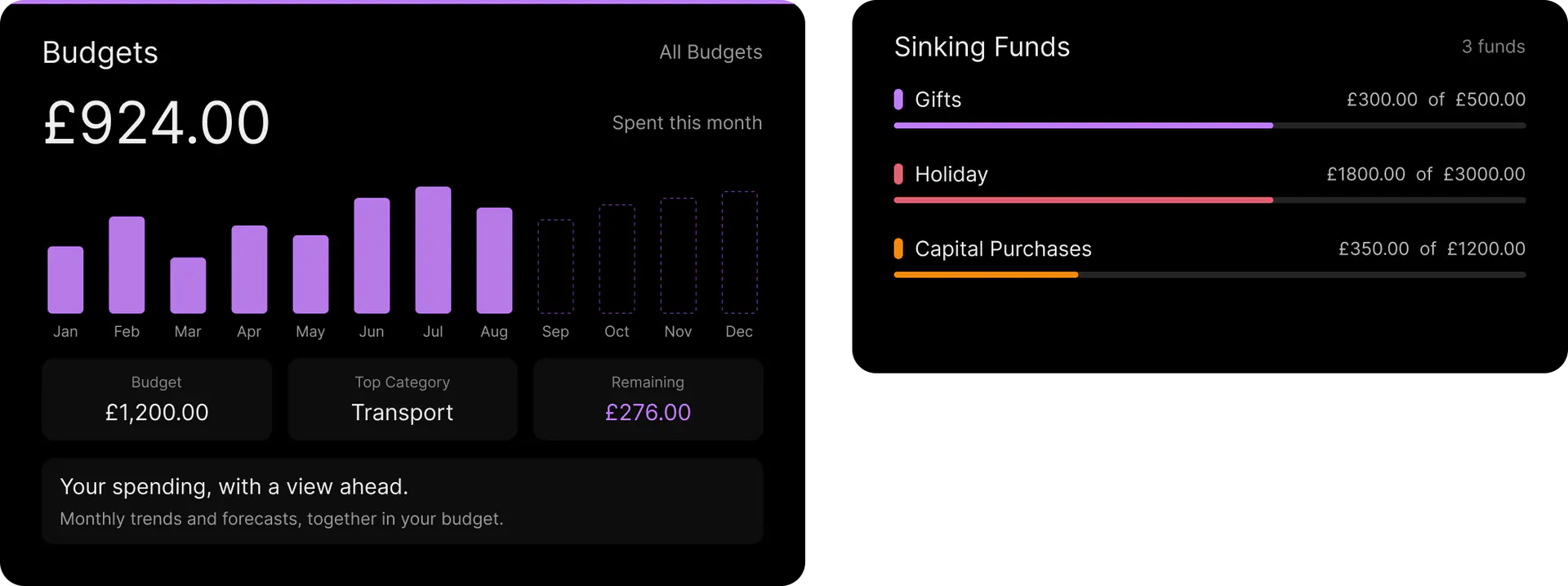
For Ben's example, you could create three sinking funds in Vardon, each with its own target. As you allocate money, you can track progress and see how much remains to be saved.
Recording these funds alongside everyday spending makes it clearer which money is available to spend and which is reserved for future bills.
Where to keep your sinking funds
Vardon's Rest Easy figure brings together sinking funds, emergency savings and accumulated interest, showing the total reserved for future expenses and financial protection.
An easy-access savings account with a competitive interest rate is generally a useful place to keep sinking funds. The money can earn interest until the bill is due, while remaining available when you need it.
Final thoughts
Set a target and a payment date for each expense, then make regular contributions and track your progress. Saving smaller amounts in advance helps keep larger bills from disrupting your everyday budget or drawing on emergency savings.
Vardon's Sinking Fund guide explains how to manage these targets alongside your budget.
